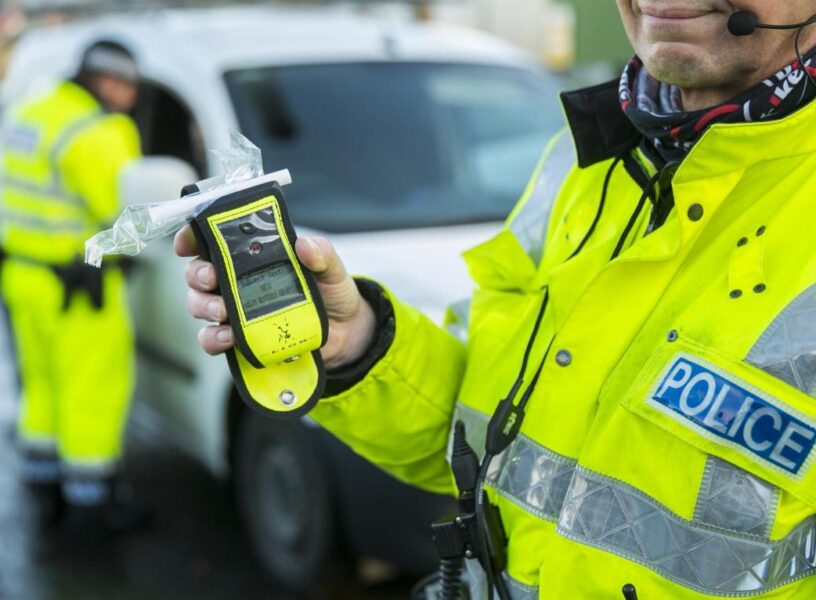
Being charged with drink-driving can be an extremely stressful and daunting experience. The repercussions of a conviction can affect your work, driving licence, and personal life, often causing significant anxiety about the future. If you are facing a charge, it’s natural to wonder whether you might have a defence and what steps you should take next.
Drink-driving remains a common offence. In 2024, there were 27,208 convictions in England and Wales, that’s roughly 75 convictions per day. These figures highlight both the prevalence of such cases and the importance of seeking expert legal advice promptly. As specialist motoring offence solicitors, we have extensive experience in handling drink-driving charges and can guide you through the legal process with clarity and confidence.
Why have you been charged?
Any motorist driving or attempting to drive their vehicle on a road or public place, whilst exceeding the legal limit of alcohol in their system, can be found guilty of this offence.
The legal limit for drink driving is:
35ug in breath
107mg in urine
80mg in blood
However, the police do not commonly proceed to initiate proceedings on breath specimens below 40ug. As drink driving is a strict liability offence, there is no requirement for impairment or intent to be evidenced. An evidential specimen showing the individual is over the legal limit is sufficient to proceed with laying formal charges for the offence.
Get Expert Advice Now
Our phone lines are open until 7PM on weekdays. Call now for immediate assistance, or reach out via our contact page and we’ll get back to you as soon as possible.
There are a number of defences that may be available to someone facing a drink driving charge. The defence applicable to a specific individual case will depend on the circumstances of the case and the individuals’ personal circumstances. We have summarised the most common defences for the offence below but would recommend contacting our motoring team for a free initial consultation, with advice tailored to you.
Post Drive Consumption
If you have consumed alcohol after driving, but before the police obtained an evidential specimen from you - you may have a post driving consumption defense. When running this defense, you are essentially making the argument that had it not been for the alcohol you consumed after driving, you would not have been over the legal limit. In order to run this defense successfully, you will need to prove that at the time of the alleged offence you were under the legal limit, that the positive specimen provided was a result of alcohol you consumed after driving and that you had no intention of driving your vehicle again whilst over the limit.
In order to successfully run a defense of this nature, you will need to obtain an independent expert report, evidencing that the alcohol you consumed after driving caused you to exceed the legal limit. The expert will take into account the precise amount of alcohol you consumed prior and after driving, as well as the food and drink you consumed on the day in question, as this can impact on your reading. Once completed, this report (if favorable), alongside verbal submissions from the expert can be used at Court to substantiate your defence.
Recollected Consumption
If you do not believe the specimen you have provided to be accurate, either because you simply have not consumed alcohol or have consumed less alcohol than you believe you have tested positive for, then it is likely worthwhile contesting the charge. The leading case for this defense is Cracknell v Willis (1988) 1 AC 450, which supports any Defendant challenging the evidential specimen obtained if it does not aline with their recollected consumption of alcohol.
In order to run this defense, we would require the CPS to serve an SFR1 initially, which is an overview of the intoxicology procedure (the testing of your blood). Once received we can then formally reject this, on the basis you do not believe the evidential specimen listed to be accurate. The CPS will then need to provide us with a copy of your SFR2 and analytical data pack, which is a detailed breakdown of the intoxicology procedure and how your blood specimen has been tested. We would then require an independent expert to prepare a report to determine if any errors have been made or any abnormalities are present. Once completed, this report (if favorable), alongside verbal submissions from the expert can be used at Court to substantiate your defence.
Faulty Equipment
The equipment used when retrieving a specimen for analysis must be carefully maintained and calibrated to ensure that the results are accurate. In cases where a breath specimen is taken for analysis, the police must ensure that the breathalyzer machine is calibrated and maintained. If the police have failed to do so and have produced an incorrect reading as a result, this could make the specimen produced invalid. Similarly, in cases where a blood or urine specimen has been obtained, the procedure whereby the specimen is taken is very technical and thus there is scope for errors to be made, both by the people conducting the tests and with the equipment used. If upon investigation, an error or issues are found, this could prevent the prosecution from being able to successfully prosecute you.
No evidence of driving
In order to successfully convict an individual of drink driving, the prosecution must be able to evidence that you drove or attempted to drive the vehicle, pursuant to Section 5(1)(a) of The Road Traffic Act 1988. If it is your position that you did not drive or attempt to drive at the time of the alleged offence, you may have a defense available to you. The burden is on the prosecution to evidence that you were driving/attempting to drive at the time of the alleged offence. The prosecution will often rely upon witness statements from officers/witnesses/other motorists or CCTV to evidence that you were driving the vehicle at the time of the alleged offence. If the prosecution is unable to prove that you were driving the vehicle, this could lead to their case against you failing.
Procedural Errors
From initially stopping a vehicle at the roadside to releasing the individual from the police station; police officers have to follow a very strict procedure and protocol. If the police fail to comply or act in line with these policies/procedures, this could potentially result in your case being withdrawn.
Statutory Warning
During your time at the police station, the officers will likely follow the Manual of Guidance Drink and Drug Driving or MGDD. This is a set of forms the acting police officer will run through with you at the police station, outlining the procedure that should be followed and the questions that should be asked. This form will also include the relevant statutory warning, which should have been provided.
When requesting a blood, breath or urine sample from you, the acting officer must first give you a ‘statutory warning’. A statutory warning is a warning and essentially an explanation that failure to provide a specimen for analysis will leave you liable to prosecution. This is typically conveyed slightly differently by each officer, but for a breath testing procedure they should effectively state something along these lines of:
‘You are required to provide two specimens of breath for analysis and failure to provide either of these specimens will render you liable for prosecution’.
If you do not recall being given the statutory warning, this could be grounds for dismissal, even if you have provided a positive evidential specimen for analysis. When looking at raising a defense on this basis, the burden is initially on the prosecution to evidence that the warning was given. This can be evidenced by either a witness statement from the relevant police officer confirming the warning was provided and them attending Court to assert the same under oath or by way of video footage showing the evidential warning being given. If the prosecution is unable to evidence the statutory warning was provided, this could lead to your case being dismissed.
Contact our Solicitors Today!
If you have been charged with drink driving and need guidance on your options or potential defence, our specialist motoring solicitors are here to help. We offer clear, practical advice aimed at reducing penalties, protecting your licence, and achieving the best possible outcome for your case.
For your free initial consultation, contact our team today: